

How Hotels Can Track Daily Revenue Production by Travel Agent, Company & Source in OPERA PMS
May 1, 2026Understanding Opera Cloud Identity Management (OCIM) in Practical Terms
May 9, 2026After working with Oracle Opera v5 for more than 20 years, I can clearly say one thing:
Moving to Opera Cloud is not just an upgrade but it’s a completely different way of working.
Many articles talk about features and benefits, but from my experience, the real difference is much deeper. It affects how hotels manage systems, integrations, operations, and even daily troubleshooting.
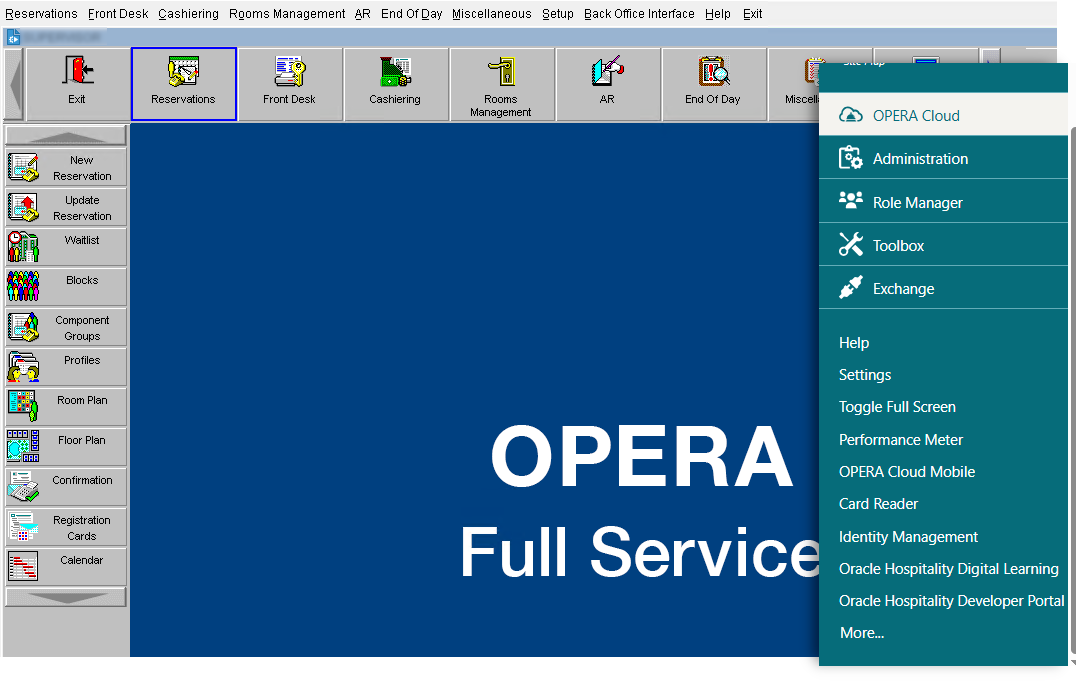
In this article, I will explain this transition in simple, practical terms based on what we actually see in live hotel environments.
For those who have started your careers with Opera Cloud, see What Opera PMS v5 is and how it works.
1. The Biggest Change: System Architecture
Let me start with the most important difference.
Opera v5 (Simply “V5” as we all know it)
- Installed on hotel servers (on-premise)
- Built on Oracle Forms
- Depends on Java and browser configurations
Anyone who has supported Opera v5 – or even received support, will remember (and some of you are still on V5):
- Java version issues after Windows updates
- Browser compatibility problems
- Antivirus tools blocking runtime components
- Users suddenly unable to log in
- IT teams spending hours just to keep the system stable
- Heavy dependency on local support companies
- Escalations moving from Oracle Level 1 → Level 2 → sometimes Development
- Hardware and software maintenance contracts
These were not rare issues; they were part of daily operations. In larger hotels, this often required dedicated IT teams just to maintain stability.
Opera Cloud (What changes)
Opera Cloud removes most of these challenges:
- Runs fully in the browser (HTML5)
- No Java, no ActiveX
- No local installation
- Hosted on Oracle Cloud Infrastructure
👉 In simple terms:
- Opera v5 → Hotel IT manages the system
- Opera Cloud → Oracle manages the system
This alone removes a major operational burden from hotel IT teams.
2. Infrastructure & Cost Reality
In Opera v5 environments, hotels are responsible for:
- Servers
- Database maintenance (usually via support contracts)
- Backups
- Disaster recovery
- Security updates
This requires:
- Skilled IT resources
- Continuous investment
With Opera Cloud:
- Infrastructure is handled by Oracle
- Updates are automatic
- System is always on the latest version
👉 From what I’ve seen, this is one of the most practical benefits, even though it is not always highlighted.
3. Integration: OXI-like Interfaces vs OHIP (A Major Shift)
If you have worked with Opera v5 integrations, you already know:
In v5:
- OXI, OWS, HTNG (SOAP-based)
- Heavy XML structures
- Complex certification processes
- Long implementation cycles
Each integration was almost a project by itself:
- Detailed mapping
- Multiple testing cycles
- Weeks (or longer) to complete
In Opera Cloud:
We now have OHIP (Oracle Hospitality Integration Platform).
Put simply, integration is no longer part of the PMS alone – it is a dedicated platform.
- REST APIs instead of SOAP
- JSON instead of XML
- Much simpler and cleaner structure
👉 What this means in reality:
- Faster development
- Easier testing
- More flexibility
Also:
- Thousands of APIs available (with Oracle registration)
- Much more self-service compared to v5
👉 In practical terms, a large portion of Opera Cloud functionality can now be accessed via APIs.
Real-time capability improvement
- Webhooks enable real-time updates
- No need for polling or batch-based processing
Examples:
- Reservation created → external systems react immediately
- Room status updated → reflects instantly across systems
While v5 had Business Events (OXI/HTNG), this is a clear improvement in responsiveness and design.
4. “AI Room Assignment” – A Practical View
You will often hear about: “AI Room Assignment”
Let’s look at this realistically.
Opera v5 already had:
- Rule-based assignment
- Preferences
- Basic automation
Opera Cloud improves this with:
- Better data handling
- More flexibility
- Potential for advanced logic
However:
👉 In real operations, this is still mainly enhanced automation, not fully autonomous AI decision-making.
My usual advice to clients:
- Yes, it is better
- But do not expect something completely “intelligent” in the true AI sense
5. Mobility: What It Really Means
Mobility is often highlighted, but it’s more than just using a tablet.
The real impact is:
- Access from anywhere
- Real-time updates across departments
Example:
- Housekeeping updates room status
- Front Office sees it instantly
- No calls, no delays
This improves:
- Room turnaround time
- Department communication
- Operational efficiency
6. Security: A Shared Responsibility
In Opera v5:
- The hotel is responsible for everything
- Servers
- Network
- Security
- Compliance (PCI, etc.)
In Opera Cloud:
- Oracle handles infrastructure security. For details, how OCIM handles user access in Opera Cloud
- The hotel handles:
- User management
- Access control
- Configuration
Including systems like OCIM (Opera Cloud Identity Management) for centralized user control across environments such as Opera Cloud Reporting & Analytics (R&A).
👉 This is known as a shared responsibility model
From experience:
- Security can be stronger in Cloud
- But only if user access is properly managed
7. The Most Underrated Benefit
One of the biggest advantages, often overlooked:
👉 Removing years of accumulated technical problems
In Opera v5 environments:
- Legacy setups
- Workarounds
- Old integrations
- Dependency issues
- Even unresolved financial imbalances
These build up over time. Moving to Cloud forces a reset:
- Cleaner setup
- Standard processes
- Modern integrations
👉 You don’t carry old problems into the new system, if migration is done correctly.
8. My Advice to Hotels Planning Migration
From my experience:
- Do not underestimate data preparation
- Review integrations carefully (OXI ≠ OHIP)
- Train users early because the interface is very different
- Expect operational changes, not just technical ones
👉 Migration is not just a system change rather it is a business change.
Final Thoughts
Opera Cloud is not just a new version of Opera.
It is a different platform designed for:
- Modern integrations
- Real-time operations
- Reduced IT dependency
Hotels that move early:
- Adapt faster
- Integrate easier
- Stay competitive
From a consultant’s perspective, this transition is not optional in the long run but it is simply the direction the industry is moving toward.
Written by Mohamed, e360 Hospitality Solutions, Oracle Opera PMS Consultant with 20+ years experience.
